Concrete Retaining Walls in Abbotsford: Durable & Stylish Landscape Solutions
Need a retaining wall in Abbotsford? Learn how concrete retaining walls add strength, drainage control, and clean design to Fraser Valley properties.
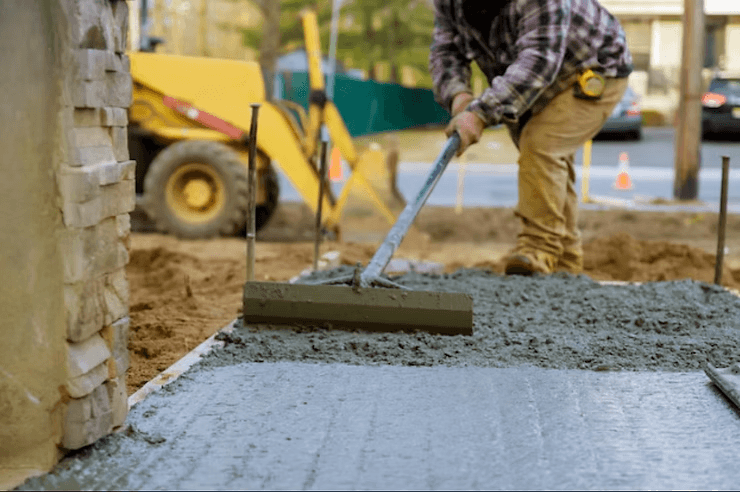
Concrete Retaining Walls: Stylish & Functional Landscaping Solutions
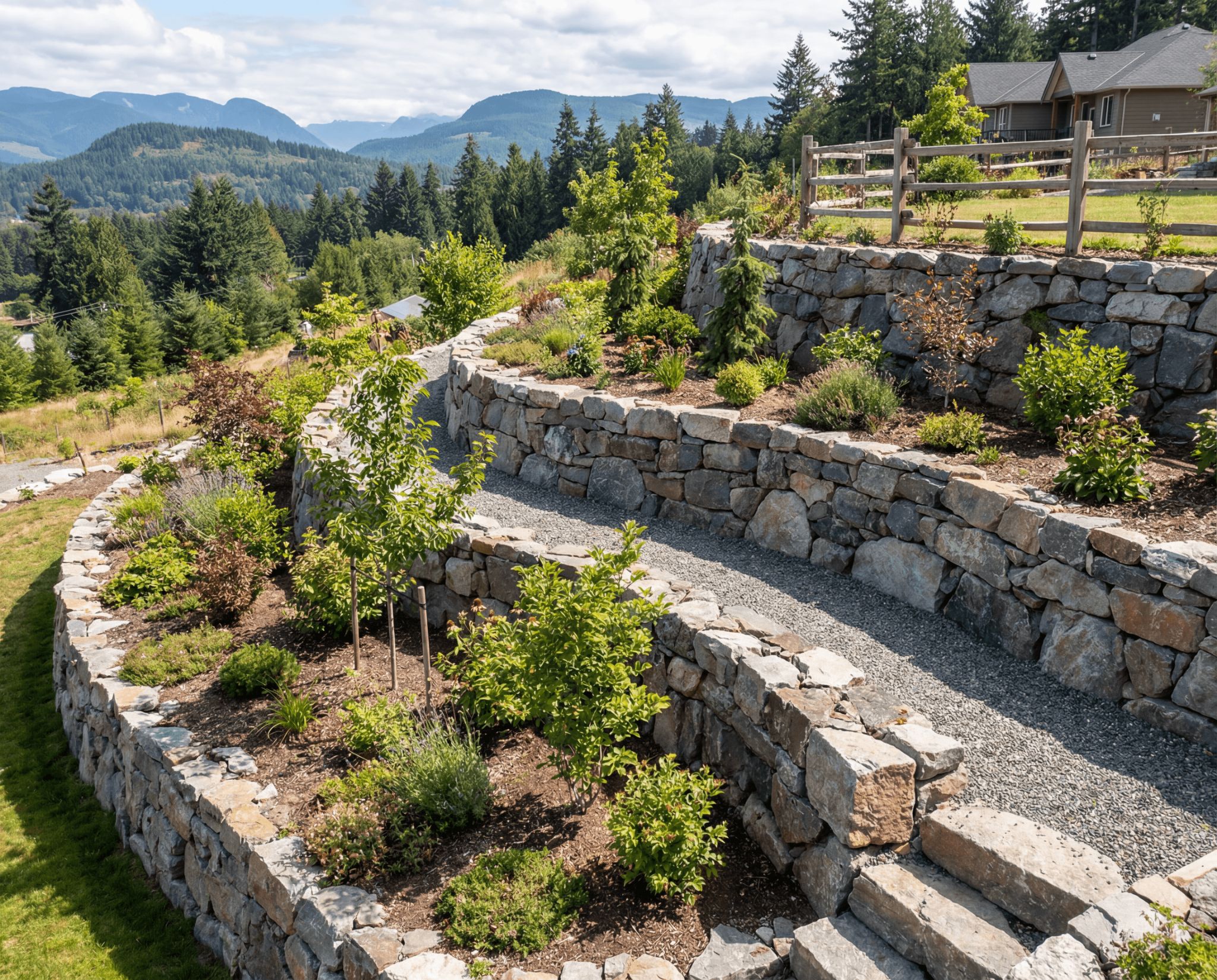
Concrete retaining walls are often viewed as purely structural. In reality, modern retaining wall systems combine engineering strength with clean, architectural design.
In Abbotsford, Mission, and Langley, retaining walls are commonly required due to:
Sloped properties
Heavy seasonal rainfall
Soil movement
Erosion concerns
When designed and installed properly, concrete retaining walls improve both usability and appearance.
1. What Is a Concrete Retaining Wall?
A retaining wall is a rigid structure built to hold back soil and stabilize elevation changes.
Concrete retaining walls can be constructed using:
Poured-in-place reinforced concrete
Precast concrete panels
Segmental interlocking concrete blocks
Each system offers different structural and aesthetic benefits.
Common Types of Retaining Walls
Gravity Walls
Use weight and mass to resist soil pressure.
Cantilevered Walls
Reinforced concrete design that uses leverage for support.
Anchored Walls
Include ground anchors for additional reinforcement.
Segmental Block Walls
Interlocking concrete blocks installed without mortar.
The correct system depends on height, soil conditions, and load requirements.
2. Benefits of Concrete Retaining Walls
Structural Strength
Concrete performs well under compression and resists long-term soil pressure.
Versatility
Concrete can be formed into straight, curved, or tiered configurations.
Design Flexibility
Modern finishing techniques eliminate the outdated industrial look.
Low Maintenance
Minimal upkeep when drainage is properly installed.
Longevity
Professionally installed concrete walls can last decades.
For properties in the Fraser Valley, durability against moisture is especially important.
3. Common Uses in Abbotsford Landscaping
Residential Applications
Leveling sloped yards
Creating flat lawn areas
Containing raised garden beds
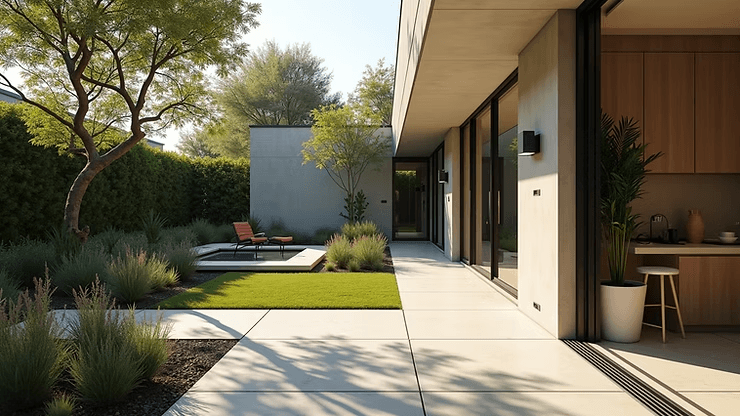
Framing patios and outdoor kitchens
Supporting driveways
Commercial & Strata Applications
Managing elevation changes
Separating parking and pedestrian areas
Reinforcing slopes
Creating clean property boundaries
Retaining walls often serve both structural and visual purposes.
4. Design Options: Concrete Doesn’t Have to Look Plain
Modern retaining walls can complement many architectural styles.
Textured Finishes
Stamped stone patterns
Exposed aggregate
Sandblasted finishes
Coloured Concrete
Charcoal grey
Soft taupe
Earth-toned browns
Modular Block Systems
Interlocking designs
Curved or straight profiles
Built-in textures
Decorative Enhancements
Integrated lighting
Built-in seating
Planter integration
Water feature incorporation
Well-designed retaining walls often become focal points rather than background structures.
5. Choosing the Right Wall for Your Property
Important considerations:
Height
Walls over certain heights require engineering.
Drainage
Improper drainage is the most common failure cause.
Soil Type
Clay-heavy soils common in parts of Abbotsford affect stability.
Climate
Freeze-thaw cycles require proper base preparation.
Visual Style
Match your home’s architecture and overall landscape design.
Professional evaluation ensures long-term performance.
6. Installation: DIY vs. Professional
DIY Retaining Walls
Suitable for:
Small garden walls under 3 feet
Decorative edging
DIY installations require:
Compacted gravel base
Proper leveling
Basic drainage consideration
Professional Installation Recommended For:
Walls over 3 feet
Structural load-bearing walls
Sloped properties
Drainage-sensitive areas
Professional installations include:
Engineering (if required)
Structural calculations
Drainage design
Permit handling
Basic Installation Process
Excavation
Compacted gravel base
Level first course
Install drainage pipe
Backfill with aggregate
Stack and secure additional layers
Cap and finish
Improper installation can lead to cracking, shifting, or failure.
7. Drainage: The Most Critical Factor
Retaining walls fail when water pressure builds behind them.
Effective drainage includes:
Perforated drainage pipe
Gravel backfill
Weep holes (for poured walls)
Surface grading away from wall
In the Fraser Valley’s rainy seasons, drainage planning is non-negotiable.
8. Maintenance Guidelines
Annual checks should include:
Inspecting for cracks
Checking for movement
Clearing drainage outlets
Monitoring soil erosion
Avoid:
Driving heavy vehicles near the wall
Blocking drainage paths
Allowing deep-rooted plants to compromise structure
Preventative maintenance protects your investment.
9. Cost Considerations in Abbotsford
Costs vary depending on:
Wall height
Length
Material choice
Site access
Engineering requirements
Typical ranges (approximate):
Segmental block wall: $20–$35 per sq ft
Poured concrete wall: $30–$45 per sq ft
Decorative finishes: $40–$70 per sq ft
Engineering and permits may add additional costs.
Accurate pricing requires site evaluation.
10. Sustainable Retaining Wall Practices
Eco-conscious options include:
Permeable block systems
Recycled concrete base materials
Native plant integration above walls
Rain garden integration
These practices help manage runoff and support soil stability.
Permit Considerations in Abbotsford
Local building regulations may require:
Engineering for walls over a certain height
Drainage compliance
Inspections
Professional contractors typically manage permitting requirements.
Concrete Retaining Walls Built for Long-Term Performance
When designed properly, concrete retaining walls:
Stabilize slopes
Prevent erosion
Create usable space
Improve curb appeal
Increase property value
For homes and strata properties in Abbotsford, Mission, and Langley, proper planning and drainage make all the difference.
Planning a Retaining Wall Project?
LandShapers provides:
Landscape design
Concrete retaining wall installation
Hardscape construction
Property & strata maintenance
If you're considering a retaining wall:
Request a Free Estimate and we’ll assess your property and recommend the right solution.